
Trustworthy Online Casinos in the UK: What to Check
 Available in GB
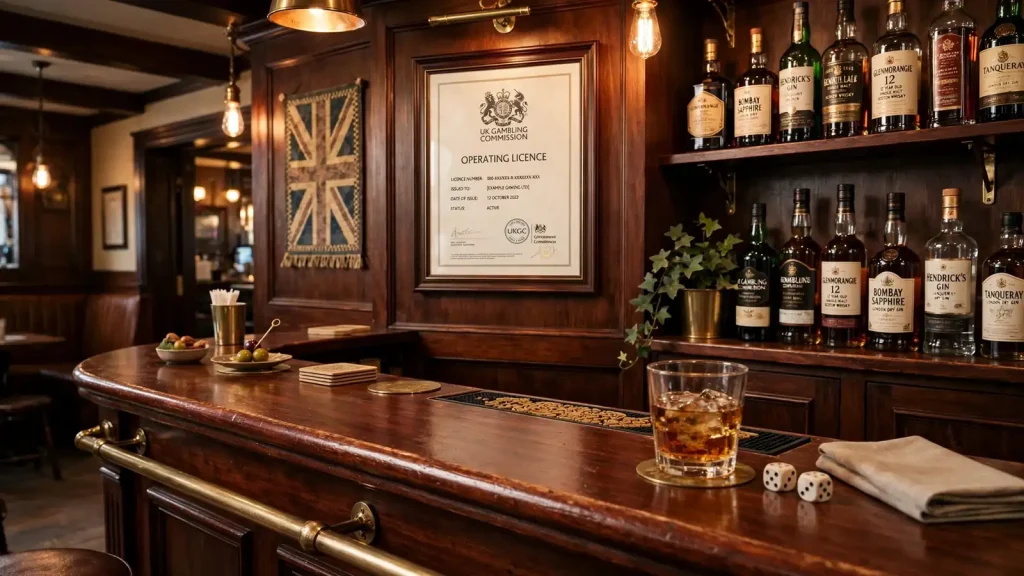
A practical way to assess licensing, account protections, payment terms and whether a casino’s claims are backed by evidence.
Table of Contents
- What Makes an Online Casino Trustworthy?
- A Licence Is a Starting Point, Not a Clean Record
- Why “Not on GAMSTOP” Changes the Trust Question
- Real-Money Play: Check the Terms and the Limits
- What to Check Before Playing Online Slots
- Bitcoin Casinos: Verify the Operator Before the Payment Method
- How to Judge a “Best” Casino Claim
- Read Casino Reviews for Evidence, Not Reassurance
- Are Online Casinos Trustworthy in Northern Ireland?
- Before You Sign Up: Verification, Withdrawals and Protection
- Safety
What Makes an Online Casino Trustworthy?
For a casino serving players in Great Britain, the first question is whether the business offering the gambling holds the relevant UKGC Licence. A polished website, familiar games or an appealing welcome offer cannot answer that question. The licence is the basic test of whether the operator is within the British regulatory system.
The Gambling Commission regulates remote gambling provided to consumers in Great Britain. An operator must hold the appropriate licence even if its business is based elsewhere. So a company’s overseas location does not, by itself, remove the requirement: what matters is that it is offering gambling to people in Great Britain. The same principle applies to real-money casino services offered to customers in England, Scotland and Wales.
This is a useful distinction because a website can be accessible without being licensed to serve this market. Access is not evidence of regulatory approval. Nor does a casino become a British-regulated service simply because its pages use pounds, refer to British customers or accept a payment method familiar to them. The relevant question is whether the operator has the UKGC Licence required for the gambling it offers here.
When choosing an online casino in the UK, it helps to check the practical details available for each option. This list gives you one such detail: the stated payout speed.
1. Jetsetspins
Payout speed: 1-3 business days Jetsetspins lists a payout speed of 1–3 business days. This gives you a stated timeframe to consider when reviewing the option.
2. BeOnBet
Payout speed: 1-3 business days BeOnBet lists a payout speed of 1–3 business days. This is the available payout detail for you to consider.
3. WinBeast
Payout speed: 1-3 business days WinBeast lists a payout speed of 1–3 business days. You can use this stated timeframe as one part of your assessment.
4. NightLuck
Payout speed: 1-3 business days NightLuck lists a payout speed of 1–3 business days. This is the specific information available here about its payouts.
5. NightWin
Payout speed: 1-3 business days NightWin lists a payout speed of 1–3 business days. The stated timeframe may help you assess whether its payout timing suits you.
6. EvoSpin
Payout speed: 1-3 business days EvoSpin lists a payout speed of 1–3 business days. This is the available detail to weigh when considering the operator.
7. SlotoSport
Payout speed: 1-3 business days SlotoSport lists a payout speed of 1–3 business days. You have a stated payout timeframe to take into account.
8. Dieselwin
Payout speed: 1-3 business days Dieselwin lists a payout speed of 1–3 business days. This is the only specific operator detail provided here.
9. Zombillion
Payout speed: 1-3 business days Zombillion lists a payout speed of 1–3 business days. You can factor this stated timeframe into your review.
10. SpinFormula
Payout speed: 1-3 business days SpinFormula lists a payout speed of 1–3 business days. This gives you a specific payout detail to consider.
A licence matters because it places the operator within a defined regulatory framework, with the Gambling Commission responsible for regulating its remote gambling activity in Great Britain. That is a more meaningful basis for trust than the operator’s own description of itself. A claim such as “safe”, “trusted” or “UK-friendly” is marketing language unless it is supported by a verifiable regulatory status.
The licence is a threshold, not a guarantee that every part of a player’s experience will be satisfactory. It does not promise that you will win, make a bonus worthwhile or ensure that every customer-service interaction will be smooth. Gambling always involves the possibility of losing money. Regulatory status answers a narrower but essential question: is the business offering this gambling to people in Great Britain operating under the required local licence?
That distinction helps make the phrase “trustworthy casino” less vague. Trust should not be based on how reassuring a site looks or how confidently it describes its service. Start with whether the operator is licensed for this market. Then consider the other practical questions that affect your experience, such as the terms attached to play and the protections available to customers. Those checks build on the licensing baseline; they do not replace it.
Non-Gamban Casino UK: How It Differs from GAMSTOP
When comparing online casinos, avoid treating a familiar brand name as proof. The company behind the service, rather than the appearance of its website, is the party whose regulatory status matters. The same applies if a casino is presented through an app or another online channel: the format does not change the requirement for a relevant licence when the service is offered to consumers in Great Britain.
It is also worth keeping “licensed” separate from “best”. A licence is not a ranking or an endorsement of one casino over another. It establishes that the operator is subject to the applicable regulatory regime; it does not tell you which site has the most suitable games, terms or service for your circumstances. Those are separate matters, and they should be judged using evidence rather than a badge or a slogan.
A practical first check is therefore simple: identify the business offering the gambling and establish whether it holds the relevant UKGC Licence for Great Britain. If that basic condition is not met, the casino should not be treated as equivalent to a licensed British operator, however familiar or convenient it may seem. If it is met, you have cleared an important threshold, not completed every trust check.
Trusted UK Casino in 2026: Checks That Matter
That is the core answer when asking what makes an online casino trustworthy in Great Britain. The operator must be within the regulatory system that governs remote gambling offered to consumers here. This gives you a firm starting point for assessing a casino, while leaving room to examine the terms, controls and customer protections that determine what using the service is actually like.
A Licence Is a Starting Point, Not a Clean Record
A casino’s brand name is not always the name of the company responsible for operating it. To judge whether a site deserves your trust, look past the logo and find the legal entity connected to its UK-facing domain. Then consider what the regulator’s records say about that entity. A UKGC Licence is an important safeguard, but it does not amount to a clean bill of health for every company or domain associated with it.
Start with the exact web address you intend to use. Search the UK Gambling Commission’s public register for that domain and note the operator name and account details shown in the entry. Do not assume that a familiar brand name is enough to identify the business: the registered company may have a different name. Equally, a domain appearing in a register entry does not make the brand and the company interchangeable. Keep track of which name belongs to the site and which belongs to the regulated business.
The distinction matters when you read about a casino elsewhere. An article may discuss a brand, while a regulatory notice names a company. Before deciding that the notice is relevant—or irrelevant—check whether the regulator’s records connect that company to the domain. A mismatch between the names is a reason to investigate further, not a reason to stop looking.
Non-UK Licence Casinos: What the Licence Means
The register can also identify a relationship that is not obvious from a casino’s branding. For instance, the regulator’s public register records 333casino.com as a White Label domain associated with Grace Media (Gibraltar) Limited, under account 57869. That entry gives you a concrete link between a domain and a named company. It does not, by itself, tell you everything about the commercial arrangement, the site’s day-to-day decisions or the quality of its customer service. Treat the register as evidence of the relationship it records, rather than as a complete account of how the business operates.
Once you have a company name, search the regulator’s records for enforcement action involving it. This is a different check from confirming that a domain appears in the register. A licence record tells you about the regulated status associated with an operator or domain; an enforcement record can show that the regulator has taken action over conduct. Read the notice itself where possible. Pay attention to the company named, the date, the conduct described and the action imposed. A headline alone may omit details that change how you understand the finding.
Grace Media illustrates why both checks matter. On 26 June 2025, the UK Gambling Commission imposed a £60,000 financial penalty on Grace Media for breaches involving self-exclusion and consent for direct electronic marketing. The register connection and the enforcement action answer separate questions: one identifies a recorded relationship between a casino domain and a company; the other records regulatory action against that company. Neither should be substituted for the other.
Verifying an Operator
Step 1: Find the domain
Identify the exact web address of the casino you intend to use.
Step 2: Search the register
Search the UK Gambling Commission’s public register for that domain to find the registered operator name and account details.
Step 3: Check enforcement records
Search the regulator’s records using the legal company name to identify any past enforcement actions or financial penalties.
A past penalty is relevant evidence, but it is not a complete verdict on every site linked to a company. It does not, on its own, establish what is happening today, nor does a domain link prove that every aspect of a brand’s operation was covered by the particular enforcement action. Keep the scope precise: note what the regulator said the company breached, and avoid turning that finding into a broader claim about matters it did not address.
The reverse is also true. Finding no enforcement notice in a quick search is not proof that a company has never had a problem. Search results can be incomplete or use a company name you have not yet identified. Check the legal name shown in the register, including any stated company suffix, and search that name rather than relying only on the casino’s public-facing brand. If the register shows a different operator from the name used in promotional material, use the registered details as your starting point for the further checks.
These steps help distinguish a verifiable operator from a reassuring presentation. A professional-looking site, familiar branding or a licence badge does not tell you whether the regulator has recorded action against the company behind it. Nor does an enforcement record make every associated domain identical in its conduct. The useful question is narrower: what does the regulator connect to this domain, and what has it recorded about the named company?
Merkur casino online UK: games, sites and rules
For a trustworthy online casino, the aim is not to find a company with a flawless-looking search result. It is to understand the evidence and its limits. Match the domain to the register entry, identify the company behind it, and read any enforcement record in context. That gives you a more grounded basis for judging a casino than treating its licence as a guarantee of an unblemished record.
Why “Not on GAMSTOP” Changes the Trust Question
A casino’s claim that it is “not on GAMSTOP” is not a minor difference in account features. For an operator serving customers in Great Britain under the UK Gambling Commission’s regime, participation in the national self-exclusion scheme is compulsory. The requirement took effect on 31 March 2020. So a site that presents its absence from GAMSTOP as a selling point should not be treated as equivalent to a licensed British casino.
GAMSTOP lets people exclude themselves from online gambling with participating operators. Self-exclusion is intended to put a barrier between someone and gambling when they have decided they need one. It is therefore not simply a preference setting, like choosing which messages to receive. An operator’s participation is part of the protections attached to the Great Britain regulatory system.
That distinction matters if you are searching for a trustworthy casino that is not on GAMSTOP. The description may refer to a business outside the UKGC regime, or it may be an inaccurate claim about an operator that is supposed to participate. Either way, the wording calls for scrutiny rather than reassurance. A site cannot make itself a trustworthy British option merely by saying that it is not part of the scheme.
GAMSTOP Avoidance
Seeking a casino specifically because it is not on GAMSTOP can undermine self-exclusion barriers and indicates the operator may not be a licensed British casino.
The important point is not that GAMSTOP alone proves every aspect of a casino’s conduct. It does not. Participation is one requirement within a wider regulatory framework, not a complete verdict on how an operator behaves. But a claim of non-participation sits uneasily with the requirements for operators in that framework. If the site is targeting people in Great Britain while advertising that it avoids a compulsory safeguard, you should not assume it offers the same protections as a UKGC-regulated operator.
Nor should “not on GAMSTOP” be read as a promise that gambling will be safer, more private or easier to control. The phrase describes a gap in scheme coverage, not a quality mark. For someone who has self-excluded, seeking a casino outside the scheme can undermine the barrier they put in place. That can turn a search for access into a return to gambling at a moment when the person had chosen to stop.
If a casino describes itself as a non-GAMSTOP option, pause over what that means for the person operating it and the rules that apply to its service. Do not treat a familiar brand, polished website or confident claim as a substitute for being within the British regulatory system. The key distinction is whether the operator is subject to the Great Britain regime, under which GAMSTOP participation is mandatory—not whether the site’s own description makes it sound acceptable.
This also helps separate two different questions. One is whether a person can reach a website. The other is whether the business is operating under the safeguards required for customers in Great Britain. Accessibility does not establish regulatory status, and an operator’s willingness to accept customers does not show that it meets the obligations expected of a licensed British casino.
Casino without a UK licence: what it means
“Trustworthy non-GAMSTOP casinos” is therefore a misleading category if it implies that non-participation can sit alongside equivalent UK protections. Under the UKGC regime, it cannot: participation is required. If a site makes the opposite claim, regard that as a reason to question the relationship between its marketing and the rules governing British-facing gambling, rather than as a special advantage.
Real-Money Play: Check the Terms and the Limits
A trustworthy real-money casino is not judged only by whether it lets you deposit and play. The terms attached to a bonus and the controls over your account affect what you can do with your money. Read both before accepting an offer or making a deposit; a headline promotion is only part of the deal.
Work out the wagering requirement
A wagering requirement is the amount you must stake before bonus-related winnings can be withdrawn. Check whether it applies to the bonus, your deposit, or both, and whether any maximum cash-out or other conditions apply. The wording matters: a requirement that sounds modest can still mean placing far more in bets than the bonus amount.
For a clear illustration, a specialist casino review calculates that a £20 bonus with 10x wagering requires £200 in total stakes. That is a total of bets, not a sum you must lose, but staking the required amount does not guarantee a profit or a withdrawal. Treat the requirement as a condition to understand, not a target that makes continued play worthwhile.
Wagering Calculation
Example: £20 bonus × 10x wagering = £200 total stakes required before withdrawal.
The games that count can change the calculation. A specialist review describes slots as contributing their full stake towards wagering, while live tables and blackjack may count at a lower rate or not count at all. Check the promotion’s own terms for the games you intend to play. If a game contributes less, you may need to place more total bets to satisfy the same requirement; if it is excluded, play on it may not advance the condition.
Also check when the offer ends. A specialist casino review describes bonus funds and free spins as having a stated expiry period, with examples ranging from 7 to 30 days. The actual deadline should be shown in the offer terms or your account. If you cannot meet it without playing more than you planned, declining the promotion may be the more sensible choice.
Check eligibility and communication preferences
Welcome offers are not automatically available to every customer. A specialist review describes common restrictions such as eligibility for new customers, one offer per household, and exclusions for some payment methods, including e-wallets. These are not universal rules: confirm the terms for the specific promotion and payment method before you opt in. Do not assume that depositing in a particular way will qualify simply because the casino accepts that method.
Promotion settings deserve a separate look. Casinos must give customers more control over the types of promotions they receive and the channels used to send them. Check those preferences in your account and choose what you want to receive. Marketing messages are not a reason to accept an offer, and changing your preferences does not alter the conditions attached to one you have already taken.
Offshore Casinos for UK Players: Licensing and Risks
Set limits you can live with
Account limits are practical controls, not a test of willpower. Remote operators must prompt new customers to set a financial limit before their first deposit and make account-level limit controls accessible. Decide what you can afford to spend before playing, then use the available controls to put that boundary into effect. A limit helps manage deposits; it does not make gambling a way to earn money.
Pay attention to how changes take effect. Reductions to limits apply immediately, while increases are subject to a cooling-off delay. That difference is useful when you want to tighten a boundary, but it means you should not rely on raising a limit instantly. Review the settings alongside the promotion terms: a bonus that encourages further stakes may sit poorly with the spending boundary you set. A clear offer, chosen communications and usable limits are practical criteria for assessing the terms of real-money play.
What to Check Before Playing Online Slots
Slot rules in Britain affect the pace of play as well as the amount you can stake. Before choosing a game, check the stake shown for each spin and make sure it fits the limit for your age group. The maximum is £5 per spin for players aged 25 and over. If you are aged 18 to 24, the cap is £2 per spin. These are legal limits, not suggested spending levels; staying below the cap does not make a session affordable or remove the risk of losing money.
Slot Stake Limits
Maximum stakes are £5 per spin for players aged 25 and over, and £2 per spin for players aged 18 to 24.
The age-based distinction is easy to overlook when a game displays its stake controls in small increments. Check the amount selected before starting, and recheck it if you change the stake during play. If a game appears to let you go above the applicable maximum, stop rather than assuming the displayed setting is permitted. A trustworthy casino site should present slot play within the rules that apply in Britain, but you should still pay attention to what the game is actually showing.
The rules also shape how a spin works. Online slot spins in Britain must last at least two and a half seconds, and autoplay is not allowed. Autoplay would start successive spins without requiring you to initiate each one; its absence means you must start them individually. A faster-looking animation does not change the minimum duration required for a spin.
These restrictions are worth understanding before you play, rather than treating them as details of a particular game. They apply to online slots in the British market, not just to one provider or one style of slot. If a site or game presents autoplay as an option, or seems to offer spins that do not meet the required minimum duration, that is a reason to pause and check what you are using.
Anjouan Casino Licence in the UK: What It Means
No game becomes trustworthy simply because its stake is within the legal cap. The cap limits the amount that can be staked on a spin; it does not guarantee a return, set a limit on how long you play, or prevent losses across repeated spins. Likewise, a slot’s appearance or familiar features tell you little about whether the casino offering it is appropriate for British players. Keep the checks distinct: first understand the rules governing slot play, then assess the operator separately.
When comparing trustworthy online slots, focus on whether the game’s controls and play operate within these requirements. Treat an unexpected stake option or an autoplay control as something to investigate, not as a feature to accept because it is convenient. If the rules are not clear from the game screen, do not guess at the permitted amount; check the relevant information before continuing.
Bitcoin Casinos: Verify the Operator Before the Payment Method
Bitcoin can seem appealing if you value a digital payment method or want to avoid entering card details at a casino. But the presence of a Bitcoin option tells you about how a site handles payments, not whether the business behind it is trustworthy. A familiar wallet, a polished checkout or a promise of quick transactions is not a substitute for checking who is offering the gambling.
For customers in Great Britain, the key question is whether the operator holds the relevant UKGC Licence. Remote gambling businesses serving people in Great Britain need that licence even when the company is based elsewhere. The payment method does not change that requirement. If a site accepts Bitcoin but the operator cannot be matched to the required licence, the Bitcoin facility does not make it equivalent to a licensed British casino.
Attention: A Bitcoin payment option does not prove a casino is trustworthy; you must still verify that the operator holds a relevant UKGC Licence.
Start with the business name, rather than the casino’s branding. A site may use a trading name that differs from the company responsible for its gambling services. Look for the operator’s legal name in the site’s terms or licensing information, then check whether that business is authorised to offer remote gambling to customers in Great Britain. Do not treat a logo, a licence claim in a footer or a Bitcoin address as proof on its own.
The distinction matters because payment convenience can draw attention away from the more important issue: who is accountable for the gambling service. A site can make a cryptocurrency payment process look clear and still leave you uncertain about the operator. If its identity is vague, or its licence claim does not match the business named in its terms, pause rather than letting the payment option settle the question for you.
A trustworthy Bitcoin casino is not defined by accepting Bitcoin. It would still need to meet the same licensing requirement as any other remote gambling business serving Great Britain. Consider the operator first, and treat the payment method as a separate decision. That keeps a useful feature in perspective: Bitcoin may affect how you fund an account, but it cannot establish that the casino is properly authorised.
Curacao Casino Licence in the UK: What It Means
This is not a recommendation to seek out sites simply because they offer cryptocurrency. Nor is a Bitcoin label evidence that a site is safer, more private or more reliable. Check the operator’s status before considering whether its payment options suit you. If the business cannot be verified as holding the required UKGC Licence for the British market, the method of payment does not resolve the concern.
How to Judge a “Best” Casino Claim
A casino being described as one of the best is a judgement, not proof of who operates it. Before relying on the claim, compare the website address you are considering with the UK Gambling Commission’s public register, then check that the named operator matches the register entry. A familiar brand name on a page is not enough if the legal business behind it is unclear.
The register gives a concrete way to make that comparison. Its domain records show leovegas.co.uk as an active UK-facing domain linked to operator account number 39198. The Commission’s operator records identify LeoVegas Gaming PLC under the same account number. Matching the domain and account details to the named company is more useful than relying on a ranking badge or a review’s broad assurance.
Treat this as a check of the specific site, not a permanent endorsement of every page using the same brand. A domain can be mistyped, redirected or changed, and an operator may have more than one site. Read the address carefully and confirm that the entry refers to the domain you intend to use. If the register details do not line up with the claim, pause rather than assuming the difference is harmless.
Do
- Match the domain to the register entry
- Verify the operator’s account number
- Check the legal business name
Don’t
- Rely on a ranking badge
- Trust a broad review assurance
- Assume a brand name is enough proof
This method also helps you separate two questions that rankings often blur: whether the business and website correspond to a recorded operator, and whether the casino deserves to be called “best”. The first can be checked against the register. The second depends on evidence behind the ranking, such as what was compared and whether the review explains its judgement. A high position alone answers neither question.
The register is a useful reference at the time you check it, not a guarantee that a casino will suit you or that its terms are favourable. Use the exact UK-facing domain and operator name when checking; that small step makes a “best casino” claim easier to assess on its merits.
Read Casino Reviews for Evidence, Not Reassurance
A casino review is only as useful as the trail of evidence behind it. Praise such as “safe”, “reliable” or “trusted” is a judgement, not proof. Look for the name of the company operating the casino, not just its brand, and check whether the review explains how it reached its conclusions.
Useful evidence is specific and independently checkable. A review might identify the operator’s entry on the UK Gambling Commission’s public register, then explain what that entry says. If it discusses enforcement, it should give the regulator’s finding and date rather than rely on vague claims that the company has a “clean record”. Links to the original register or regulator notice let you check whether the review has quoted the record accurately and whether it is still current.
USA Casinos for UK Players: Licensing and Risks
Grace Media illustrates why this matters. The Gambling Commission imposed a £60,000 financial penalty on the company on 26 June 2025 over breaches involving self-exclusion and consent for direct electronic marketing. A review that mentions the penalty should describe what it concerned and distinguish the regulator’s finding from the reviewer’s opinion about what it means for customers. A review that says only “fully trusted” leaves out information that could affect your judgement.
Check when the review was updated, too. Operator details and regulatory records can change, so an old review may no longer describe the current position. A date alone is not evidence of a fresh check: look for signs that the writer revisited the underlying records, rather than merely changing the page label.
Be cautious when a review makes broad claims but gives no named operator, record, document or explanation. A polished page can still be promotional; confident wording does not make a claim verifiable. Where a review discusses its commercial relationship with the casino, that disclosure helps you understand the context, but it does not prove the review is accurate.
The strongest reviews separate facts from assessment. They show what can be checked, explain the limits of what that evidence establishes, and avoid turning a regulatory entry into a blanket assurance about every aspect of a casino.
Are Online Casinos Trustworthy in Northern Ireland?
A UKGC licence is not a UK-wide guarantee. The Gambling Commission’s remit under the Gambling Act 2005 covers England, Scotland and Wales; Northern Ireland is not within its remit for remote-gambling provision in the same way. So a statement that an online casino is “UK-licensed” needs context: it may describe regulation for Great Britain, not establish that the same rules apply in Northern Ireland.
Best Offshore Casino Sites: UK Licensing and Risks
That distinction matters when you are deciding whether an online casino is trustworthy. A licence or register entry from the Gambling Commission can tell you about an operator’s position in the Great Britain market. It should not, on its own, be treated as proof that the operator is authorised under the rules relevant to Northern Ireland, or that a Northern Ireland customer has the same regulatory protections.
The reverse is also important: the fact that a site accepts customers in Northern Ireland does not show that it is trustworthy. A site’s own description of its licence is a claim, not independent confirmation. Read the wording carefully and identify which regulator and jurisdiction it refers to. If the site uses “UK” broadly, look for a more precise explanation of what that means for customers where you live.
Avoid transferring conclusions from one part of the UK to another. Rules that apply to operators serving Great Britain cannot simply be assumed to answer the legal or consumer-protection question for Northern Ireland. Nor should a casino’s familiar branding or accessible website be taken as evidence of regulatory oversight.
For a Northern Ireland resident, the practical question is therefore not just whether a casino appears legitimate, but which legal framework governs the service being offered to them and what recourse is available if something goes wrong. If that is unclear, treat the uncertainty as material rather than filling the gap with a Great Britain licence claim. Trust depends on knowing what oversight actually applies; the UKGC label alone cannot settle that question for Northern Ireland.
International Casinos for UK Players: Legal Risks
Before You Sign Up: Verification, Withdrawals and Protection
Before opening an account, check what the operator will ask you to provide and when. In Great Britain, an online casino must verify your identity before you can deposit or play, and it must check your age before accepting a deposit. Identity checks commonly involve a photo of your passport or driving licence and a recent utility bill. Make sure you can supply the required documents and that the details match your account information.
Do not assume that passing the initial checks means there will be no further questions. An operator may ask for documents when you request a withdrawal, particularly if it still needs to confirm your identity or the ownership of a payment method. LeoVegas, for example, says it generally checks identity at the first withdrawal and asks for photo ID and proof of address dated within three months. That is an operator-specific requirement, not a timetable that applies to every casino. Read the withdrawal terms before depositing, so a later request does not come as a surprise.
Before making a first deposit, look for the prompt to set a financial limit. UK-licensed remote operators must ask new customers to set one and make account-level limit controls accessible. Check that you can find those controls in the account, and understand how to reduce a limit or request an increase. Reductions take effect immediately; increases have a cooling-off delay.
Also locate the account’s self-exclusion option and the complaints procedure before you need either. Licensed operators must provide an internal process for complaints and access to an approved Alternative Dispute Resolution service if a complaint remains unresolved. These are practical protections, not a promise that every dispute will be decided in your favour.
If gambling is causing concern, support is available through the National Gambling Helpline on 0808 8020 133, which operates around the clock. Knowing where the controls and support are—and what documents may be requested—makes it easier to judge how an account will work before money is involved.
Which casino payment methods are generally quickest?
PayPal withdrawals are the quickest of the listed options, typically clearing in around 4–6 hours on weekdays and 8–10 hours from Friday to Sunday. Debit card withdrawals usually take 2–3 banking days after review.
Is 333 Casino licensed for Great Britain?
Yes. The UK Gambling Commission register links 333casino.com to Grace Media (Gibraltar) Limited as a White Label domain under account 57869.
Is LeoVegas UK licensed?
Yes. The Gambling Commission lists LeoVegas Gaming PLC under account 39198 and identifies leovegas.co.uk as its active UK-facing domain.
What payment types are listed?
The payment types listed are PayPal, debit cards and bank transfers.
What is the context of GAMSTOP and self-exclusion?
Online operators in the Gambling Commission’s Great Britain regime have been required to participate in GAMSTOP since 31 March 2020. Grace Media was fined £60,000 in June 2025 for breaches involving self-exclusion and consent to direct electronic marketing.
Safety

Anjouan Casino Licence in the UK: What It Means
An Anjouan licence is separate from UKGC approval, which operators need to serve customers in...

Best Foreign Casinos for UK Players: What to Know
A guide to licensing status, player protections, registration checks, bonuses, payments and self-exclusion beyond UKGC...

International Casinos for UK Players: Legal Risks
International status does not mean UKGC authorisation; licensing, offer conditions, payment risks and safeguards all...

Best Offshore Casino Sites: UK Licensing and Risks
Offshore status means an operator accepts British customers without UKGC authorisation; other licences do not...

Offshore Casinos for UK Players: Licensing and Risks
A practical guide to licensing, payment trade-offs, bonus conditions and the limits of protections outside...

British Casinos Not on GamStop: UK Licensing Explained
GamStop applies to online casinos licensed by the UKGC, so its reach does not cover...

Casino Sites Not Registered with GamStop in the UK
GamStop covers UKGC-licensed operators, while sites outside that system may not check exclusions; compare oversight,...

Casino without a UK licence: what it means
A guide to UKGC status, self-exclusion, overseas licensing, bonus conditions, complaint routes and payment risks....

Casinos That Bypass GamStop: How They Work
A casino outside the UKGC framework is not covered by the same GamStop block, and...

Curacao Casino Licence in the UK: What It Means
The licensing jurisdiction can clarify who oversees an operator, but it does not make a...

Gibraltar casino licence in the UK: what it means
A Gibraltar connection does not by itself establish who operates a casino or which protections...

Merkur casino online UK: games, sites and rules
A practical guide to game availability, operator checks, demo play, stakes and the terms attached...

Non-Gamban Casino UK: How It Differs from GAMSTOP
Gamban blocks access on a device, while GAMSTOP communicates self-exclusion across participating online gambling websites...

Non-GamStop Curaçao Casino Sites and UK Rules
A Curaçao licence label does not establish permission to serve Great Britain or show how...

Non-GamStop European Casinos: UK Rules Explained
Learn how GamStop’s shared coverage works and what to consider when assessing casino sites, self-exclusion...

Non-UK Licence Casinos: What the Licence Means
A licence from another jurisdiction is not a UK Gambling Commission licence, and the regulator...

Non-UK-Registered Casinos: Licences and Rules
The guide explains how UKGC status, overseas licences, GamStop coverage and payment terms can differ...

Non-UK Regulated Casinos: UK Rules Explained
A UKGC licence is required to serve customers in Great Britain, while overseas licensing does...

Non-UKGC Licensed Casinos: Rules and Risks
Explore how foreign licensing, player protections, bonuses and withdrawal terms differ from UKGC-regulated gambling. What...

Malta MGA-Licensed Casinos: UK Rules Explained
A practical guide to licensing, exclusion, bonuses and the difference between Great Britain and Northern...

Online Casino With No Sister Sites in the UK
A practical guide to distinguishing shared ownership from shared technology, and understanding what network links...

Online slots not on GamStop: what the term means
GamStop applies to UKGC-licensed operators, not individual slot titles, a distinction that helps clarify claims...

Safe Online Casinos in the UK: What to Check
UKGC authorisation is the starting point; terms, payments, verification and site claims still need separate...

Trusted Casinos Not on GamStop UK: What to Check
A reputation claim is not a licence: understand the legal distinction and the consumer protections...

Trusted UK Casino in 2026: Checks That Matter
Trust depends on more than a licence: operator identity, account rules, bonus terms and payment...

USA Casinos for UK Players: Licensing and Risks
The “USA” label does not establish a site’s licence; operator terms and safeguards can differ...

VPN-Friendly Casinos in the UK: Rules and Risks
VPN access policies vary, and an accepted connection does not establish an operator’s licence, trustworthiness...